Get Mini Split FL

Why your mini split smells when heating in Florida

Step 1 of 3: Equipment

A musty or burning smell when your mini split switches to heat usually means dust or mold sitting on the heat exchanger and coil, warmed up for the first time in months. Florida summers run the unit on cooling or not at all, and whatever settled on the coil during that stretch, dust, a little mildew from the humidity, bakes off the second heat runs through it. A sharper, electrical smell is different and points to something inside the unit itself, like a motor or wiring issue, rather than buildup. The dusty smell usually fades after the system runs a while. If it lingers past the first hour, or if it smells hot and electrical rather than musty, that's not something to run through again and wait out.

A wall-mounted mini-split air conditioner in a dim room, with a water streak running down the wall below it to a towel on the floor near the baseboard, beside a desk, office chair and monitor by a window.

You're at your desk on a Tuesday afternoon, the kind where it's too hot to have windows open and the mini split has finally kicked over to heat because the office stays cold with the AC off. You catch a smell first, something musty, and figure it'll pass. Then you see it: a wet streak running down the wall under the indoor unit, already a few inches long. You grab a towel from the hall closet and lay it on the floor under the drip. The smell hasn't gone away. You stand there for a second, looking at the unit, trying to remember the last time anyone looked at it.


Wait It Out or Call Someone

Let it run

  • If the smell is faint and fades after ten or fifteen minutes, it's likely just dust burning off a coil that hasn't run warm in months.
  • A one-time musty smell right when heat first kicks on doesn't mean anything is damaged or unsafe to keep using.
  • You lose nothing by waiting through one more heating cycle to see if the smell repeats or if it was a single occurrence.
  • This costs you nothing and takes no time beyond what the unit already needs to warm up.
  • If it never comes back, there was likely nothing wrong beyond a dusty coil clearing itself.

Get it looked at

  • A smell that returns every time the unit switches to heat usually means mold has built up on the coil, not just dust passing through.
  • A burning smell that doesn't fade, or one that carries an electrical or plastic edge to it, is worth having checked before you run the unit again.
  • A contractor who services mini splits in Florida year-round knows how quickly coils collect mold here, since most of these units sit idle on heat for months at a time.
  • Catching it now means one visit from one local contractor, not a bigger repair later if mold or a wiring issue is left to sit.
  • Someone who works on this equipment every season can tell you in one visit whether it's a coil that needs cleaning or something electrical that needs attention.
A woman in a gray turtleneck sweater stands by a window looking outside at snowy ground, with a dimly lit living room containing a sofa, shelves, lamp and a lit candle behind her.
A woman in a cream cable-knit turtleneck sweater stands in a warmly lit living room with a fireplace and shelves behind her, looking out a window toward snow-covered trees and a railed deck.
A woman in a cream knit turtleneck sweater stands by a window looking out at snow, with a lit fireplace, sofa and lamp in the room behind her.
A woman in a gray knit sweater sits by a window looking out at falling snow, with a dimly lit living room containing a sectional sofa, pillows, a lamp and houseplants behind her.

What should you be noticing right now in your house

Walk into the room where the mini split is running heat and pay attention to the first few minutes. A musty smell that fades is one thing. A smell that lingers the whole time the unit runs, or comes back every time it cycles, is another. Look at the wall or ceiling around the indoor unit for a dark streak or soft spot, a sign that moisture has been draining somewhere it shouldn't for a while. Check if the smell is stronger in one room than others, since that tells you whether it's one unit or something shared between them. Left alone, mold on a coil doesn't stay put. It spreads through the air the unit is supposed to be heating.

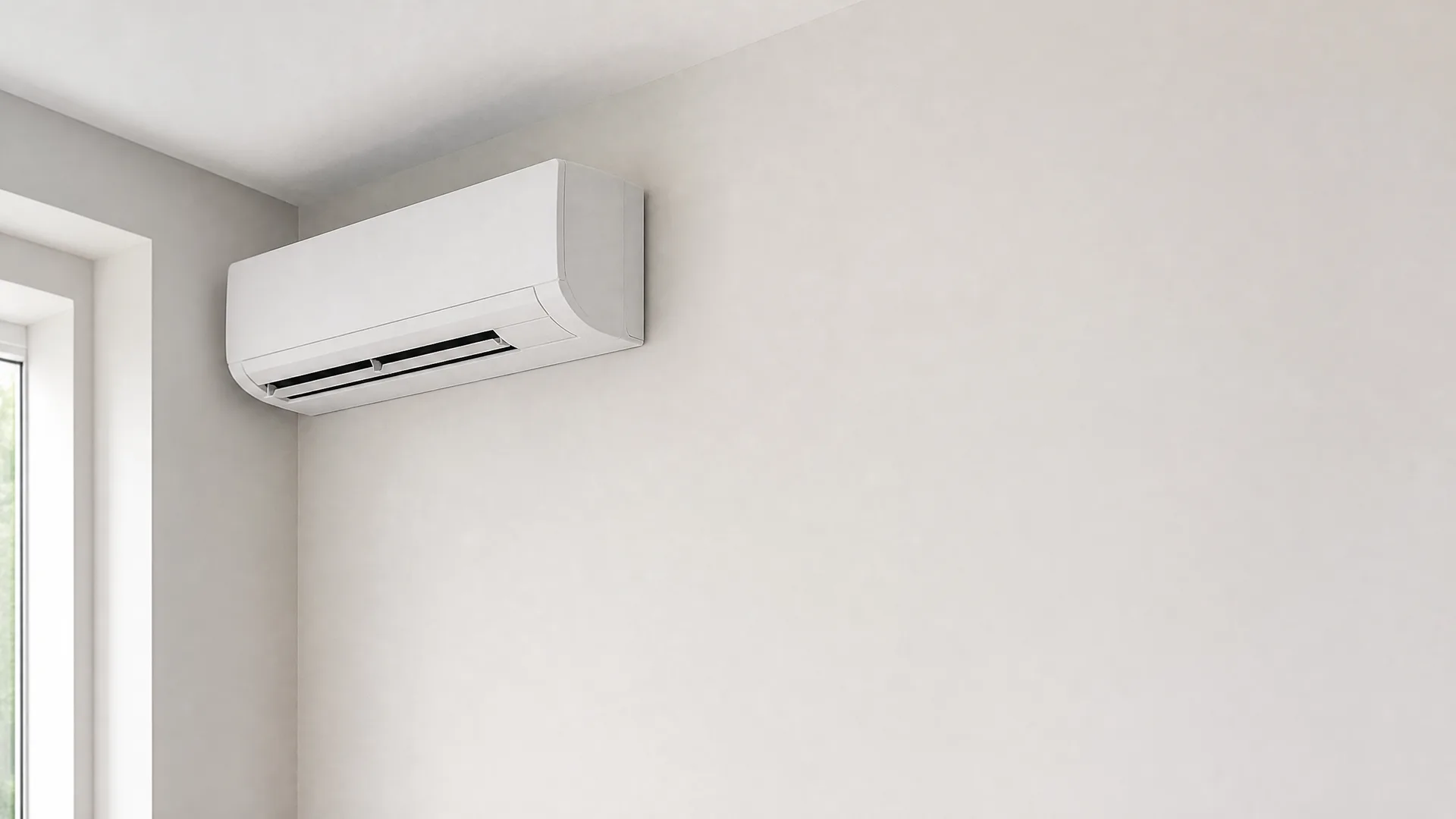
A white wall-mounted mini-split air conditioner installed high on a plain light-colored interior wall near a corner, with a window frame at the left edge.

Why the coil holds onto smells

A mini split's indoor coil sits right behind the filter, and condensation forms on it constantly while cooling all summer. That moisture gives mold and mildew something to grow on, along with any dust that gets past the filter. In cooling mode the coil stays wet and cold, which keeps odors from spreading. Once the system switches to heat, the coil warms up and dries out, and whatever was sitting on it goes into the air moving through the room.

A white wall-mounted mini-split air conditioner installed near the top of an interior corner wall, with large blank light-colored wall space to the left.

What the filter does and doesn't do

The filter is there to catch dust and larger particles before air passes over the coil, not to stop odors or kill mold. A clogged filter lets more dust reach the coil over time, but even a clean filter won't remove something already growing on the coil itself. If you pull the filter and it looks dusty or has a musty smell of its own, that's a sign the coil behind it has had the same buildup for a while.

A woman in a cream sweater and jeans stands in the open doorway of a white stucco house, holding the dark door, while a man in a dark quilted jacket seen from behind walks toward the entry past potted plants.

What happens inside the unit when heat first kicks on

The indoor unit works backward in heat mode. Instead of pulling heat out of your room, the refrigerant in the coil runs hot, and a sensor near the coil tells the board when it's warm enough to open the louver and start the fan. That's the pause you notice before air actually comes out. During that pause, the coil is heating up for the first time in months, and anything sitting on it gets baked off into the airstream the moment the fan starts.

A tech who works on mini splits all year in Florida has seen this pattern enough times to know what the smell usually means before even opening the unit, because the coil behaves the same way in every house that runs AC all summer and heat only a few weeks a year. If you'd rather have someone confirm it than guess, you can get matched with a licensed local contractor who takes calls like this regularly and will reach out directly, so you're dealing with one person who already has an idea what they're looking at, not several companies chasing the same job.

A gray upholstered sofa with a matching cushion sits beside a potted plant and a wooden table holding a small green plant in a stone pot, near a curtained window.
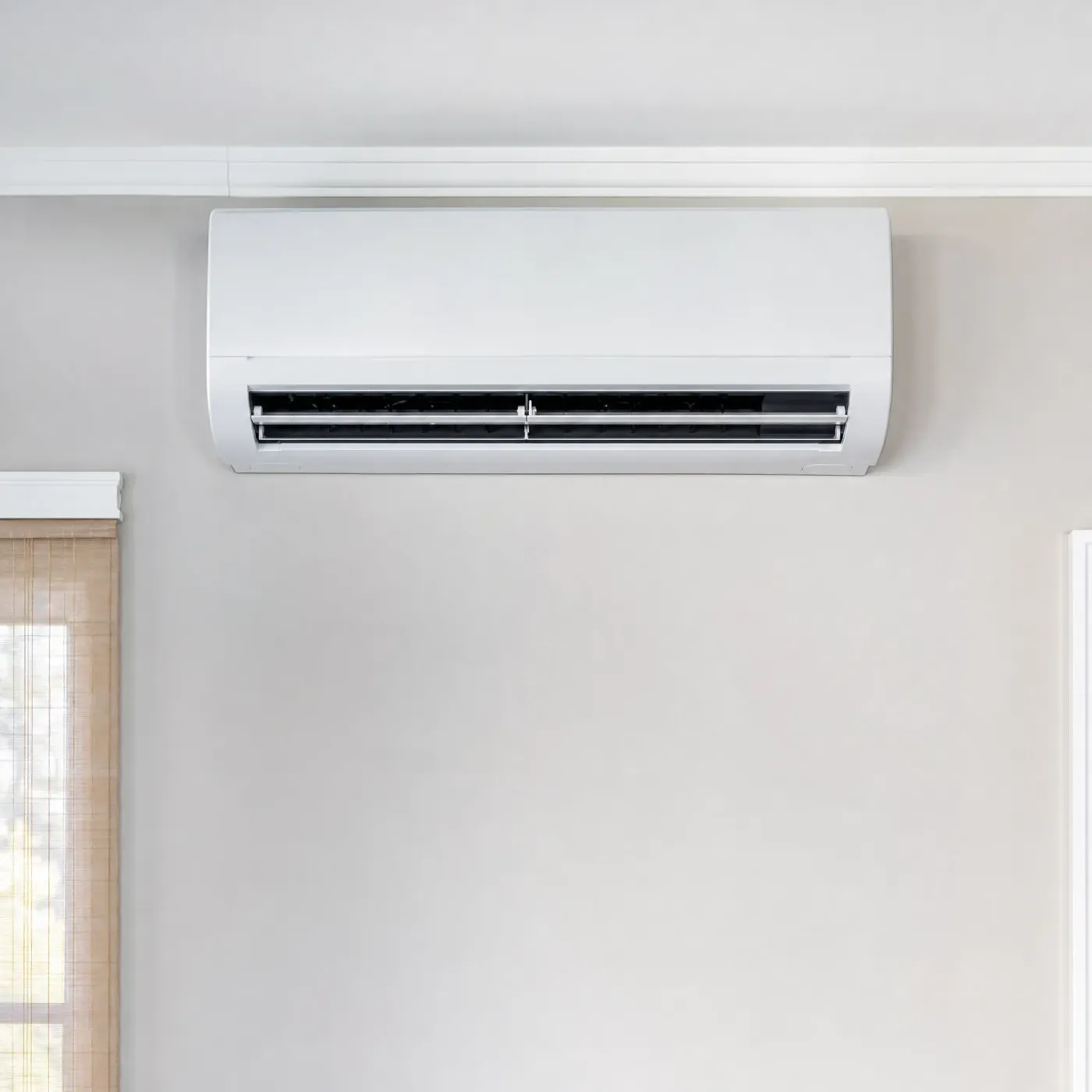
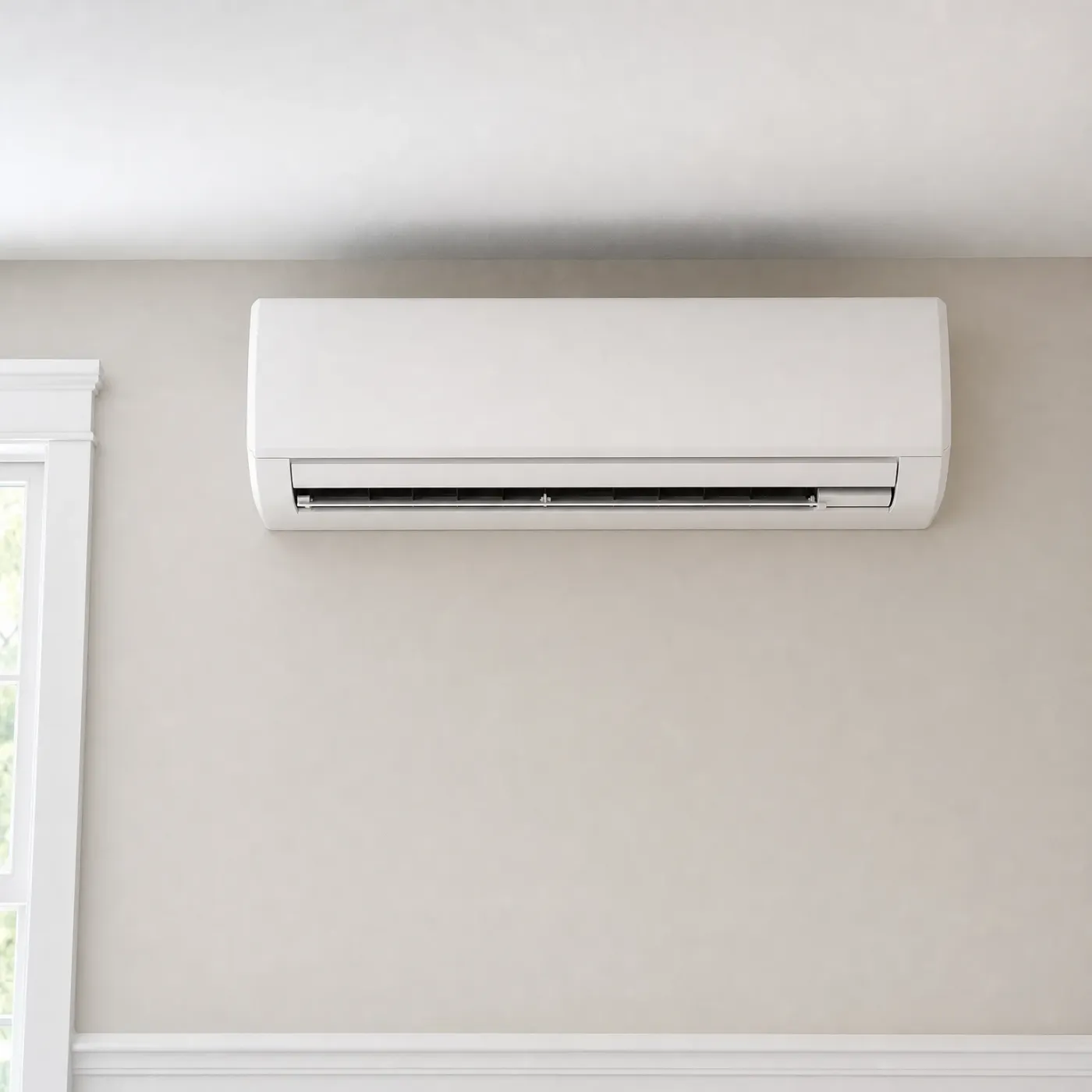
A white wall-mounted mini-split air conditioner unit installed high on a light gray interior wall below crown molding, with a bamboo-shaded window at the lower left.

Running clean

No smell when the heat kicks on, just warm air moving into the room. The coil behind the filter is clear enough that nothing sits there to burn off or grow. This is what a mini split that gets cleaned between seasons looks and smells like.

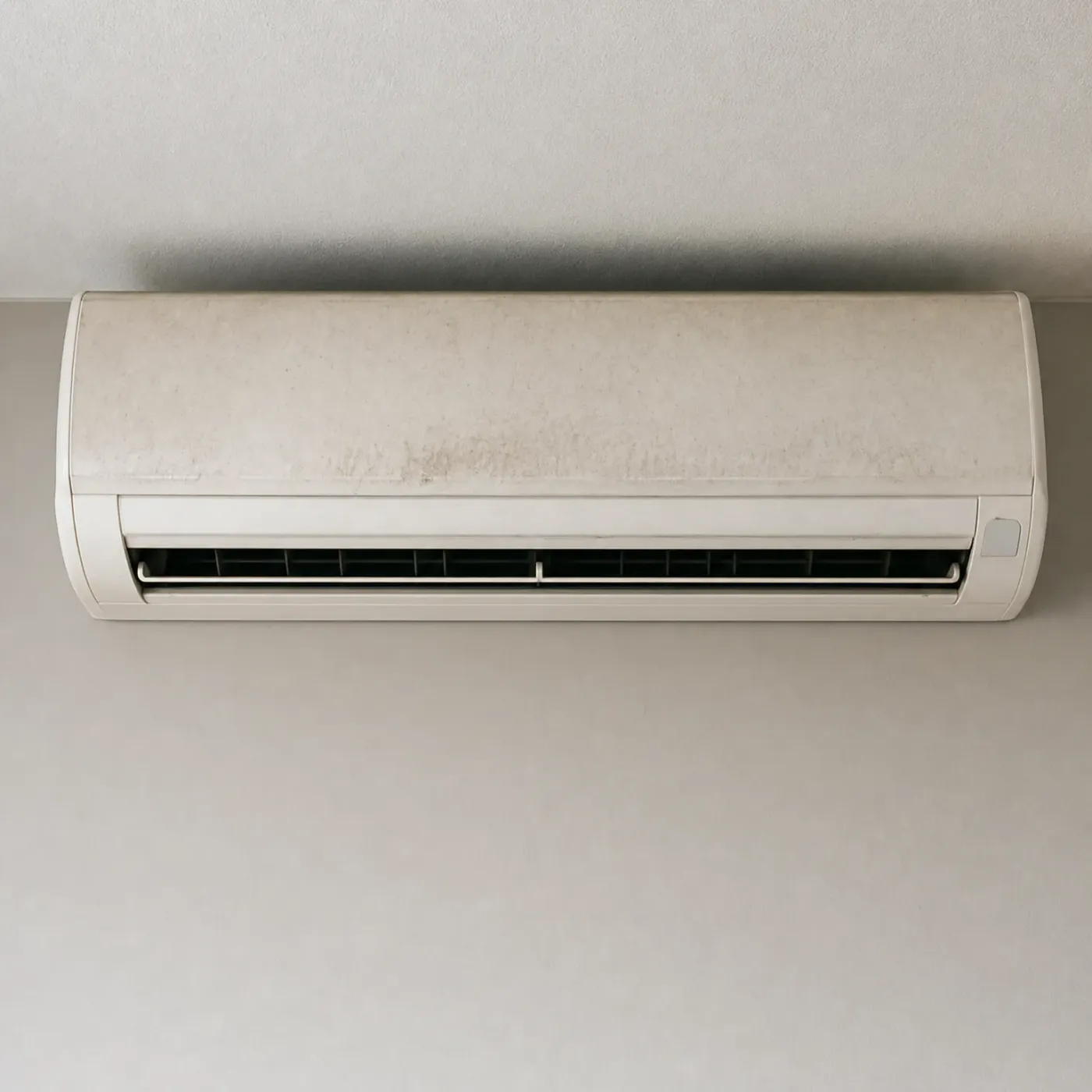
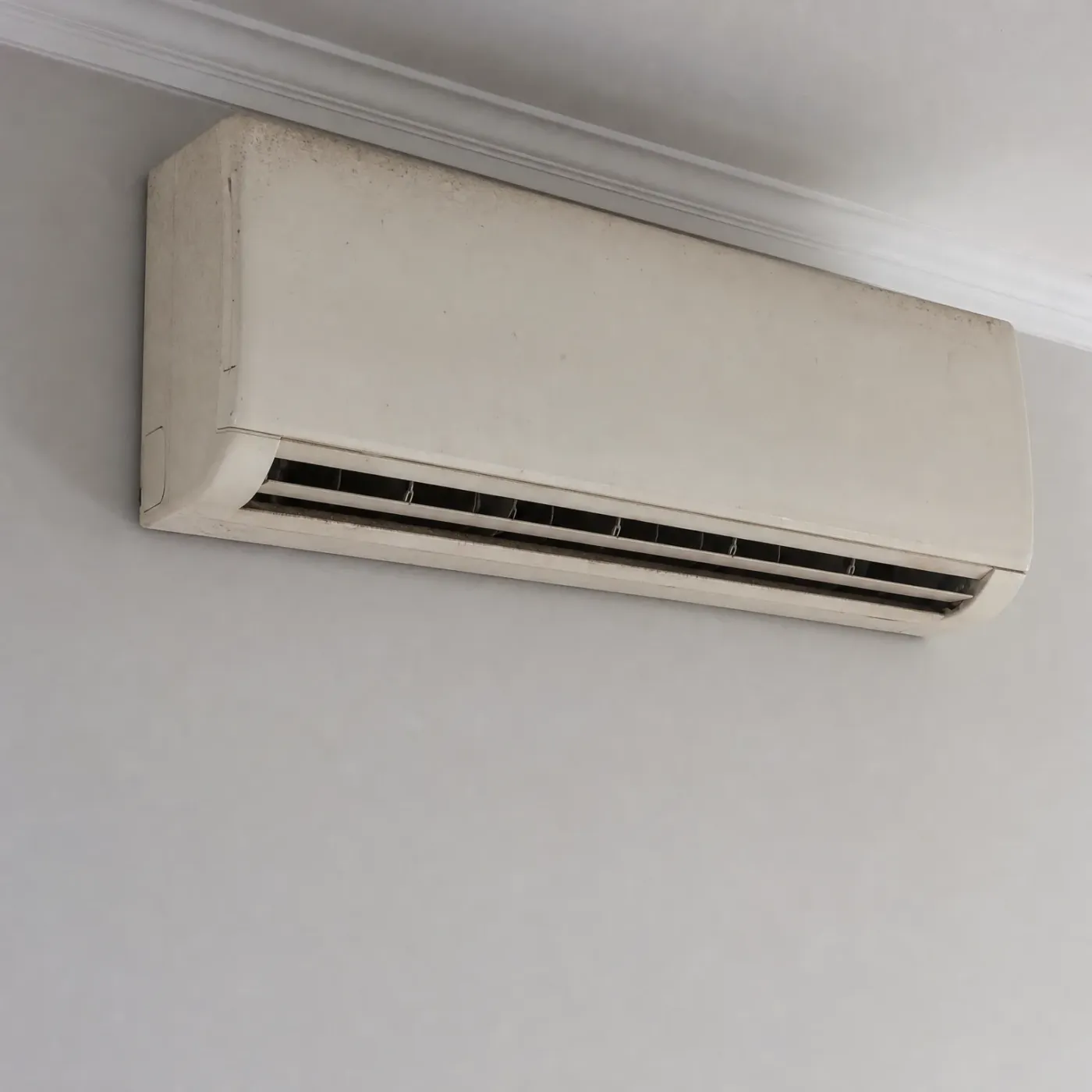
A wall-mounted mini-split air conditioner indoor unit with a dusty, discolored cover, installed near the ceiling on a plain light-colored wall.

Dust and buildup showing

The casing shows dust and a dingy film across the louvers, the kind that builds up over a summer of running on cooling. If the outside looks like this, the coil behind it likely holds the same, and that's what you're smelling when heat first runs.

A bearded man in a blue and brown plaid flannel shirt stands indoors looking out a window at snow-covered trees, with a ceramic mug on the windowsill.
A man in a blue T-shirt sits on a light gray sofa, laughing while looking at an open laptop in the foreground, with a framed picture, lamp and potted plant behind him.
Living room with a grey sectional sofa, wall-mounted white mini-split air conditioner above it, a potted tree beside sliding glass doors with beige curtains, and a wooden coffee table with a vase of foliage in the foreground.

Get the right pro for your mini split

The pro who reaches out is licensed in Florida.

Say what's going on with your mini split, and a pro who works on them reaches out.

Reach a local pro

Sending the form costs nothing.

Why does my mini split blow a burning smell instead of musty?

A musty smell makes sense to you now, that's dust or mold on a coil that hasn't run warm since spring. But what you're getting is sharper, more like something hot and electrical, and it doesn't fade the way a dust smell would. That's a different thing happening inside the unit, and it's worth knowing which part is behind it before you decide whether to keep running the heat today.

A burning smell points to the electronics, not the coil

Dust burning off a coil smells musty or like hot dust, and it fades once the coil's warmed through. A burning smell, especially something sharper or like hot plastic, usually means a component on the circuit board or the fan motor is overheating, not the coil itself. It can also mean dust has built up around the motor windings and is heating up right at the source. Either way this isn't something that clears on its own after a few minutes the way a dusty coil does. If the smell holds steady or gets stronger the longer the unit runs, that's the board or motor working harder than it should, and it's worth having someone look at before you run the heat again.

A two-story house with gray and light gray siding, white-trimmed windows and a white front door, flanked by deciduous trees, with a partly browned lawn in front under a clear blue sky.

A summer dew point of 74°F is what makes the air in Florida feel heavy even when the temperature itself isn't extreme. That moisture load is also why the coil inside your mini split stays wet through the summer, run after run, with little chance to dry out between cycles. The higher the dew point, the more condensation the coil is handling, and the more it has for dust and mold to cling to. When heat finally kicks on and warms that coil for the first time in months, that's what you're smelling coming into the room. Source: NOAA climate normals for Florida.

NASA POWER T2MDEW county cells weighted by homes

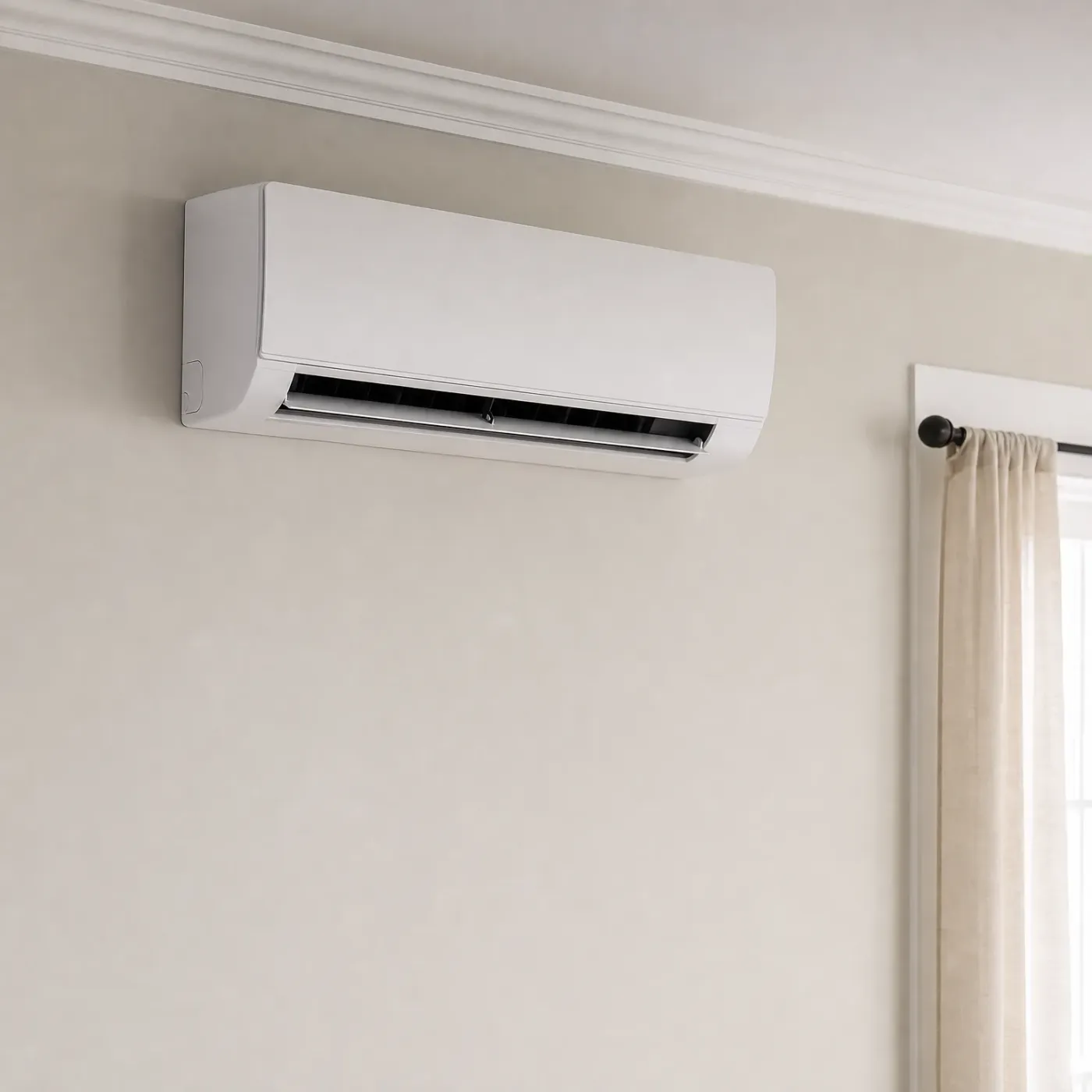
A white wall-mounted mini-split air conditioner installed high on a beige interior wall below crown molding, with a window and light curtain on a black rod at right.
A mini split like this moves warm air with no smell at all, because there's nothing sitting on the coil to heat up.
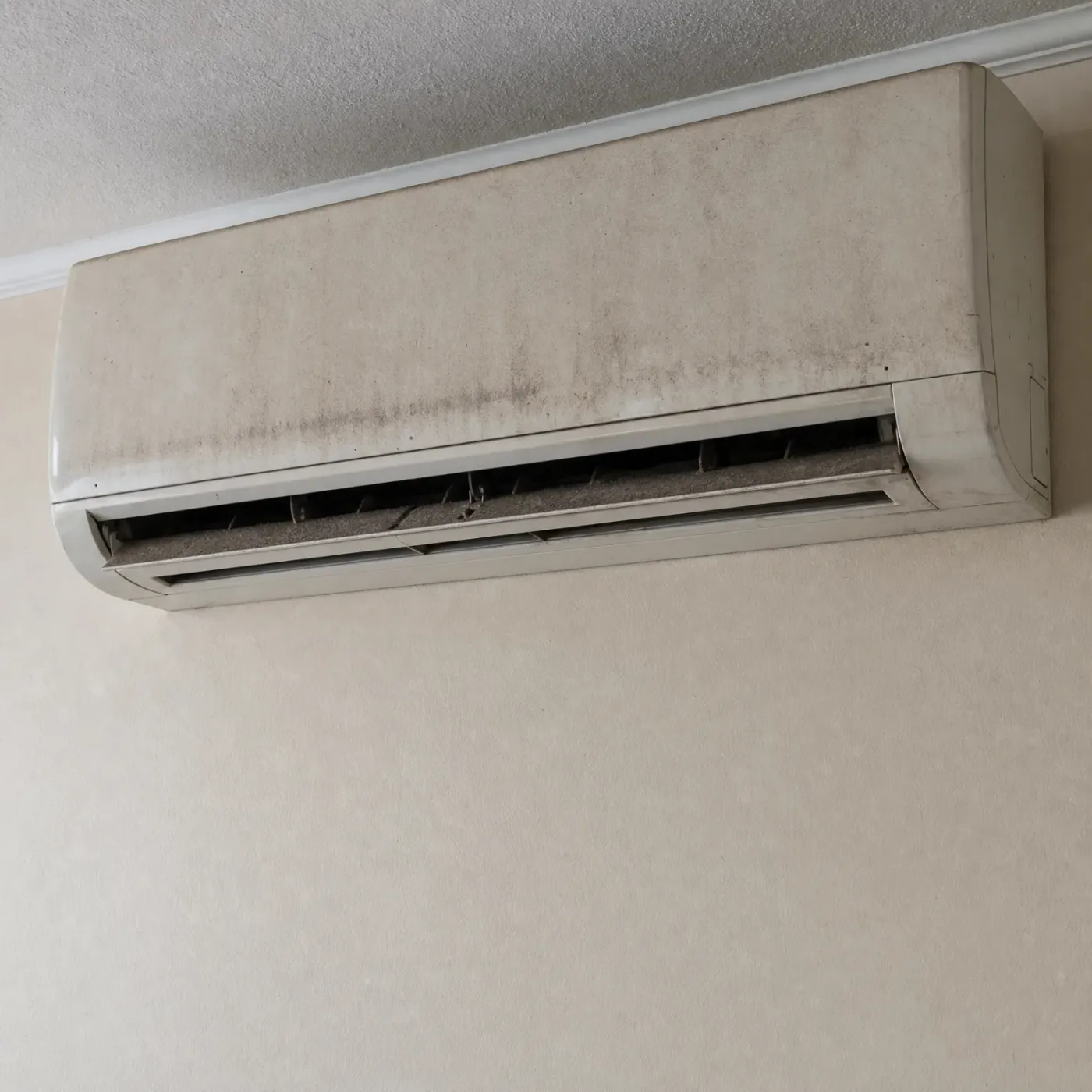
A wall-mounted mini-split air conditioner indoor unit with a dusty off-white casing and dark lower vent, installed high on a plain light-colored wall below a ceiling molding.
This is the version that smells, the dust and film on the casing a sign of what's likely built up on the coil behind it.

Power costs 15.21 cents per kilowatt-hour statewide

At 15.21 cents a kilowatt-hour, a mini split that's running clean costs less to heat your home than one working through a dirty coil. A coil caked with dust or mold makes the unit push harder to warm the same room, and that shows up on your bill before you ever notice the smell is gone.

EIA-861 2025 statewide residential average

A dusty, stained wall-mounted mini-split air conditioner indoor unit near the ceiling on a plain beige wall, with visible lint buildup at its intake grille.
Before you get your mini split repair
A white wall-mounted mini-split air conditioner installed high on a beige interior wall near the ceiling, with a white-framed window at the left edge.
After you get your mini split repair

What the smell tells you

  • A musty smell that fades within the first fifteen minutes of heat running is dust burning off the coil, not a sign of damage.
  • A smell that lingers the whole cycle, or a burning or electrical smell at any point, is a reason to get the unit looked at.
  • The coil sits wet all summer from cooling, which is exactly what lets dust and mold build up on it before heat mode ever starts.
  • A licensed contractor who services mini splits in Florida year-round has seen this exact complaint enough times to know what to check first.
  • Getting matched with one local contractor means someone familiar with this equipment handles it, not a string of calls from companies you don't know.
  • Catching this now, before the smell turns into something that shows up on your power bill, is the cheaper problem to solve.

A smell when your mini split switches to heat is information, not an emergency, at least at first. Dust and mold sit on the coil all summer because that's where condensation collects every time the unit runs cooling. When heat mode finally warms that coil, whatever settled there burns off, and you smell it. If it fades quickly, the unit did its job clearing the coil on its own. If it doesn't fade, or if it shifts from musty to something sharper and electrical, the coil or something behind it needs a real look rather than time.

That's the whole judgment call this page can walk you through. What it can't do is look at your actual unit, which is where a contractor comes in. Florida's mini splits run heat for a small part of the year and cooling for the rest, so a contractor working here year-round sees this same complaint repeatedly and knows what's usually sitting on the coil versus what points to something electrical. Getting matched means one licensed contractor local to you takes this on, not several companies competing for the job, so the person who calls you back is already familiar with how these units behave in Florida homes and what tends to go wrong first.

Whichever smell you're dealing with, you've already done the useful part by paying attention to it instead of ignoring it.

Interior room corner with sunlight from a window, showing peeling paint and damaged plaster on the wall above a white baseboard, a wooden cabinet with a pale bowl on top, hardwood floor and a patterned rug.
Interior corner of a room with tan walls, white profiled baseboard and window trim, a wood-plank floor in sunlight, and green foliage visible through the window.
An empty room corner with cream walls, white baseboard, two windows with deep sills showing green foliage outside, and a wood plank floor lit by sunlight.
Empty room corner with beige walls, white beadboard wainscoting, chair rail and baseboard, a window with green foliage outside, and sunlight casting leaf shadows on the wall above a wood floor.
Sunlit room corner with a multi-pane window, beige walls, white baseboard, wood floor with a woven rug, and a dark wooden cabinet holding a ceramic table lamp below a framed picture.

A pro who works on mini splits

Only one pro gets your request, so you hear from one company.

Find a licensed mini split pro

You're not committing to anything by asking.