
Why your mini split blows cold air in Florida
Why is my mini split blowing cold air when it's set to heat?
You catch cold air coming out of the vent when the thermostat says heat, and you want to know if that's normal or something is wrong before it turns into a bigger repair. With Florida winters mild but not warmless, you're not using this system hard enough to shrug off a malfunction, so a few minutes of cold air feels like a signal worth checking rather than ignoring.
A mini split set to heat blows cold air for a minute during defrost, but longer than that points to a problem
When the outdoor unit frosts up, the system reverses itself for a few minutes to melt that ice off the coil, and the air coming out of the indoor head goes cold while that happens. That's normal and it ends on its own. If the cold air keeps coming after several minutes, or it happens every time the unit tries to heat, the problem is usually the reversing valve stuck in the wrong position, a refrigerant leak, or a sensor telling the system it's warmer outside than it actually is. Florida winters don't push a mini split hard, which is exactly why a stuck valve or a slow leak can go unnoticed for a while. Once you've got a system that won't warm the room, that's not a wait-and-see issue.
Why a short cold burst is normal
A mini split set to heat runs a defrost cycle sometimes, and during that cycle it blows cool air on purpose for a few minutes while it clears frost off the outdoor coil. It switches back to heat on its own once that's done. That short burst isn't a fault. What points to a real problem is cold air that keeps coming, or a unit that never gets warm at all.
What keeps it from switching back
A mini split that stays on cold air, or won't push warm air past room temperature, usually has a low refrigerant charge, a reversing valve stuck in the wrong position, or an outdoor unit that's iced over and can't defrost properly. Any of these keeps the system from doing what the thermostat is asking for, and none of them clear up by changing the setting or waiting it out.
Normal Defrost or a Real Problem
Normal defrost cycle
- The cold air lasts a few minutes, then the unit switches back to heat on its own without you touching the thermostat.
- You notice it most on the coldest mornings, when the outdoor coil is working hardest and frost builds up fastest.
- The outdoor unit may look like it's steaming or blowing mist during this cycle, and that's just melted frost, not a leak.
- The indoor vent still shows the fan running, and the air stops feeling cold within a few minutes.
Something that needs a repair call
- The cold air doesn't stop after several minutes and the system keeps running on the heat setting without warming the room.
- The outdoor unit is caked in ice rather than a light frost, and it stays that way instead of clearing on its own.
- The thermostat shows a call for heat but the indoor coil stays cold to the touch well past any defrost cycle.
- A refrigerant leak or a failing reversing valve can get stuck in cooling mode, and neither clears up on its own.
- You hear the unit short cycling, switching on and off more often than it used to, alongside the cold air.
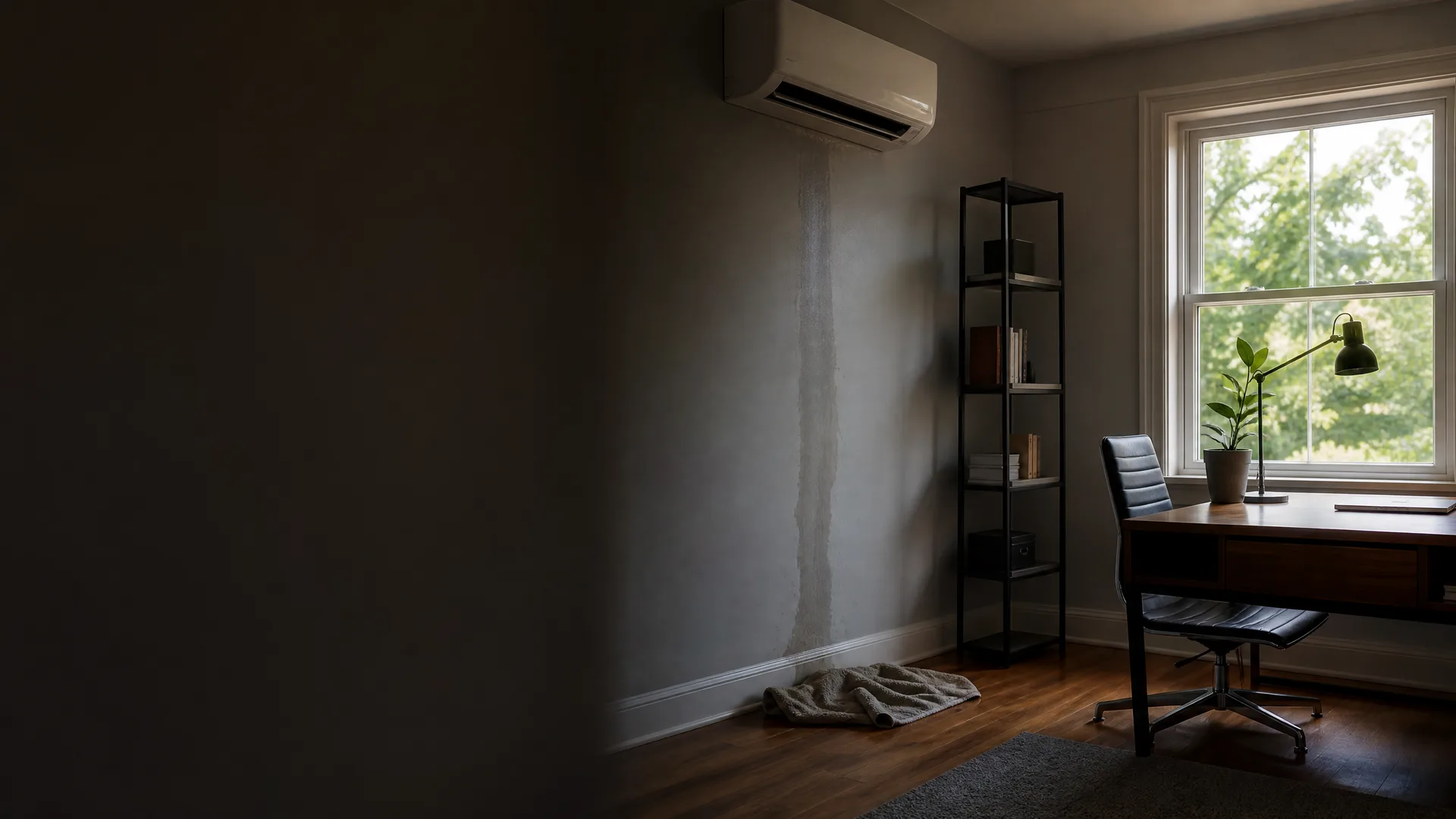
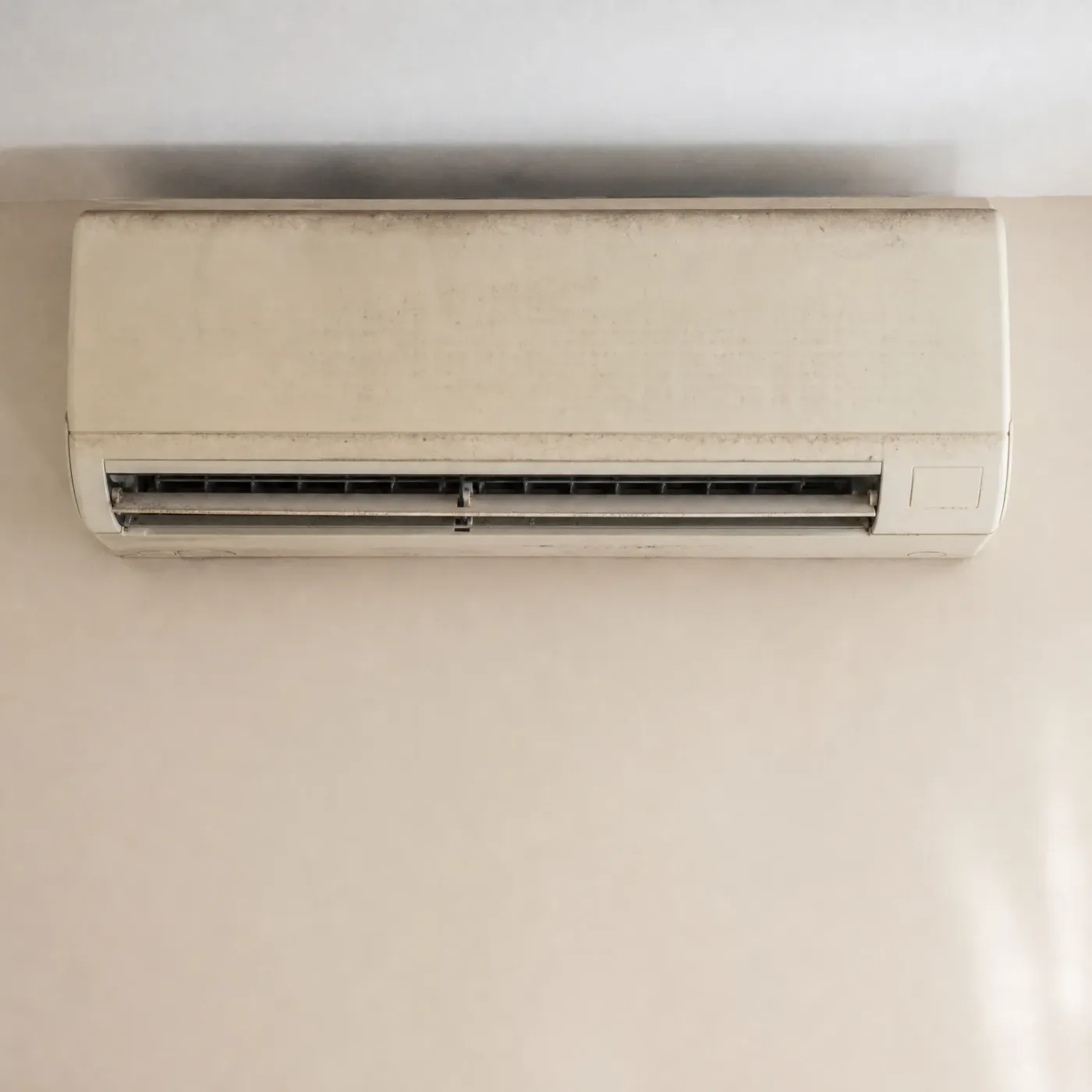
You're at your desk working from home on a January afternoon, heat running because it dropped into the 40s overnight. You glance up and notice a wet streak coming down the wall under the indoor unit, darker on the paint than it should be. You get a towel from the hall closet and press it along the bottom of the streak, then stand back and look at the unit itself, the vent, the line running out through the wall. The cold air you'd been feeling off and on this week makes more sense now. You're not sure if this is the defrost cycle doing something it shouldn't, or a drain line that's given up, and you'd rather know before the wall underneath it gets worse.
Hand off the mini split problem
A mini split that keeps blowing cold air past the first few minutes, or one that never switches back to heat on its own, isn't doing a defrost cycle anymore. That's a system that needs a tech to look at the reversing valve, the refrigerant charge, or a control board that's stuck. Figuring out who does that work in Florida usually means an afternoon lost to searching company names, calling two or three, explaining the same thing about the cold air and the thermostat setting each time, then sitting with quotes trying to guess who actually knows mini splits versus who just services central air. Send the request above and that work is done. One contractor who works on these units gets your information, and you're not the one tracking down who's available or qualified anymore. That matters more in January, when a heat pump that won't heat is the whole problem, not a minor annoyance you can put off.
What's actually happening inside the unit
- A reversing valve switches the refrigerant flow so the outdoor unit can pull heat from cold air and move it inside.
- In heat mode the valve sits in one position, and a stuck or failing valve can leave the system running backward like it's in cooling.
- The outdoor coil picks up a layer of frost in cold, humid air, and a sensor tells the system to run a short defrost cycle to clear it.
- During defrost the reversing valve flips and the indoor unit blows cold air for a few minutes while the frost melts off the coil outside.
- A control board tells the valve when to switch, and if that board misreads the temperature, the valve can stay in the wrong position too long.
- Low refrigerant charge keeps the system from building enough heat even when the valve and defrost cycle are both working the way they should.
A mini split heats by running refrigerant backward through the system, and a part called the reversing valve is what makes that switch possible. In heat mode, that valve holds one position so the outdoor unit can grab warmth out of cold air and carry it inside. Florida winters don't get brutal, but the air outside still carries enough moisture that the outdoor coil picks up frost on cold mornings, the same way a freezer does. When a sensor catches that frost building up, the system runs a short defrost cycle to clear it, and that means the reversing valve flips the other way for a few minutes. That's why you feel cold air coming out of the vent even though the thermostat still says heat. Once the coil is clear, the valve flips back and the warm air returns on its own.
A control board is what tells the valve when to make that switch, reading the outdoor temperature and timing the defrost cycle accordingly. If that board misreads the temperature, the valve can get stuck in defrost position longer than it should, and the cold air doesn't let up. Low refrigerant charge causes a different problem. The valve and the defrost cycle can both be working exactly like they're supposed to, and the system still won't build enough heat, because there isn't enough refrigerant moving through the line to carry it. Two different parts, two different failures, both end with you standing in front of a vent that's blowing the wrong temperature of air.
A sensor on the indoor coil tells the control board how cold that coil is, and the board uses that one reading to decide when defrost starts and stops. While defrost runs, the outdoor fan shuts off so the hot refrigerant can melt the frost instead of losing that heat straight back outside. Most of the time this whole process works the way it should. But the board only knows what the sensor tells it. If that sensor reads wrong, stuck or shorted, it can convince the board the coil is colder than it is, and defrost kicks in far more than it needs to. The reversing valve itself never moves on its own. It waits on a signal from the board, so a fault on the board can leave the valve sitting in cooling position without ever throwing a code you'd notice. Low refrigerant charge works against the valve too, dropping the pressure it needs to seat fully and letting it slip between positions. Even a bad capacitor on the outdoor fan motor can keep that fan running past when it should stop, stretching the cold air out longer than normal.
What's actually happening inside the unit
- A low-voltage sensor on the indoor coil reports coil temperature to the control board, and the board uses that reading to decide when a defrost cycle starts and stops.
- During defrost the outdoor fan shuts off so the hot refrigerant can melt frost without cold outside air stripping the heat back off the coil.
- A thermistor reading wrong, whether stuck open or shorted, can tell the board the coil is colder than it really is and trigger defrost far more than it should.
- The reversing valve only moves when the board sends it a signal, so a control board fault can hold the valve in cooling position without ever tripping a fault code.
- Refrigerant charge below what the system calls for lowers the pressure the reversing valve needs to seat fully, which lets it slip or chatter between positions.
- A failed run capacitor on the outdoor fan motor can keep the fan from stopping on command during defrost, letting the unit cool the coil for longer than it should.




Summer humidity here doesn't have much to do with why your mini split blows cold air in winter, but it tells you how hard that same reversing valve works all year. Averaged across June, July and August, the dew point in Florida sits at 74°F, according to NOAA. That's heavy, sticky air, and it means your mini split spends those months pulling moisture out as much as it cools. A valve and coil working that hard all summer are the same parts switching over every time the unit goes into defrost in winter. If one of them is already worn down from the summer load, a cold blast that doesn't clear on its own is more likely to show up once the weather turns.
NASA POWER T2MDEW county cells weighted by homes


Power costs 15.21 cents per kilowatt-hour statewide
Most Florida homes heat with electric resistance or heat strips backing up the mini split, and that draw costs more per hour than the compressor alone. At 15.21 cents a kilowatt-hour, a reversing valve stuck in cooling mode makes the system lean on those strips to fight cold air it shouldn't be making, and you'll see that on the bill before you see it on the wall.
EIA-861 2025 statewide residential average
A few minutes of cold air during defrost is the system doing what it's built to do. Cold air that doesn't stop, or a unit that never switches back to heat on its own, means the reversing valve, the sensor, or the control board needs a tech to look at it, not a wait and see. You already know the difference between a small thing and a thing that turns into a bigger repair, and that's exactly what tells you which one this is. If it's the second one, the part that takes real time usually isn't the repair, it's finding someone licensed who can actually get to it, calling around, explaining the same thing twice, and sorting through quotes that are hard to compare. Sending the form here takes that part off your plate. You stop being the one searching and start being the one who gets a call back from someone ready to look at the valve or the sensor and tell you straight what it needs.



One request and it's handed off
Answer a few questions instead of calling shop after shop.
You only hire the pro if you want to.