

Running the way it should
Air moves out steady and cold, and the unit cycles off once the room hits temperature instead of running straight through the afternoon. The case stays clean, no dust ring around the vents, no film on the wall below it.
Describe your mini split job, and a local pro who handles it gets in touch.
Get matchedYour mini split runs most of the year here, cooling the house through the long summer and often carrying the heating load too. You want to know what a tune-up actually covers before you have someone out, so you know what you're paying for and whether it's worth doing on a schedule rather than waiting for something to break.
A technician cleans the indoor and outdoor coils, washes or replaces the filters, and clears the condensate drain line so water moves out of the unit instead of backing up into the house. They check the refrigerant charge and look over the electrical connections and the outdoor fan motor. In Florida, the drain line matters more than it does elsewhere. The system runs long hours pulling moisture out of the air, and a clogged drain shows up as water dripping from the indoor unit or the system shutting itself off. A dirty outdoor coil loses its grip on cooling faster here too, since it's working against heat and humidity most months of the year.
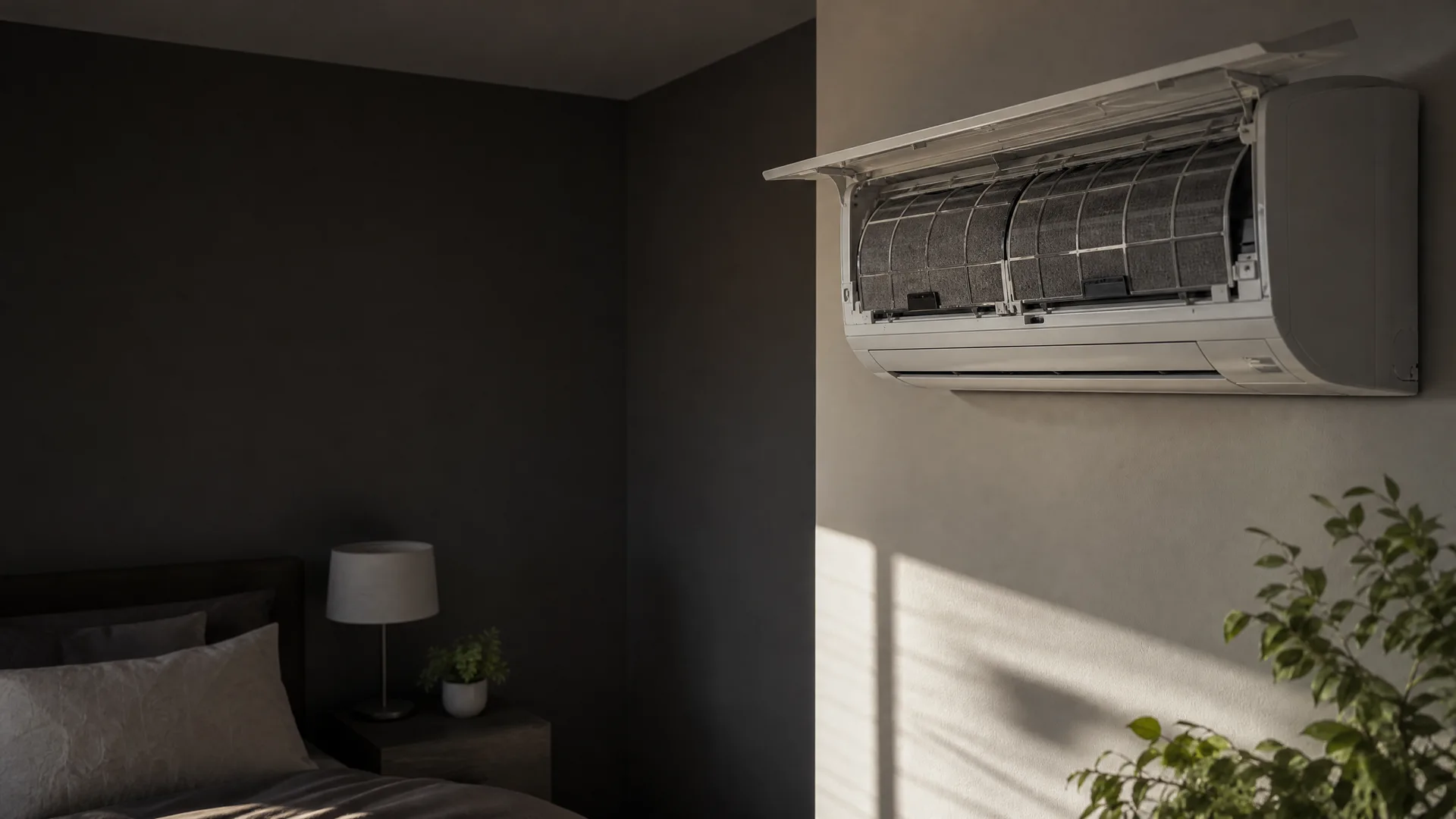
Spring cleaning finds its way into the bedroom this year, and you pull the cover off the indoor unit while you're at it. Behind it, the filter screen is coated grey, a season of pollen and dust packed into the mesh. You hadn't noticed the room running warmer than it should, not yet, but seeing the screen like this tells you why it might soon. Outside, it's still mild, the kind of day before Florida's heat really sets in. You slide the screen out, hold it up to the window light, and decide this isn't a job for a rag and a sink. The rest of the unit, the coil behind that screen, is probably no better.
You notice the room takes longer to cool than it used to, or the unit runs almost constantly through the afternoon instead of cycling off. The air coming out feels weaker than it should, even with the fan on high. Sometimes there's a musty smell when it first kicks on. Outside, the condenser might have leaves or grass clippings packed against the fins. Ice can form on the indoor coil if airflow is blocked enough. None of this means the unit is finished. It usually means it's working against dirt and restricted airflow instead of just cooling your house. Left alone through another Florida summer, that strain tends to show up as a higher bill and a compressor that doesn't last as long as it should.





Your request goes to one pro, not a list of companies.
Say what's going on with your mini split, and a pro who works on them reaches out.
Sending the form costs nothing.


A tune-up starts with the indoor filters, washed or replaced if they're past saving, because a clogged filter is the first reason a mini split loses cooling power. The tech pulls the housing on the indoor unit to clean the blower wheel, where mold and dust build up on the fins and get thrown into the room every time the fan runs. Outside, the condenser coil gets rinsed to clear the grass clippings and pollen that block airflow across it, since the coil has to shed heat for the system to cool at all. The line set gets checked where it enters the wall, and the condensate drain gets cleared, because a blocked drain is the usual reason a mini split starts dripping water out of the indoor unit. The tech also checks refrigerant pressure against what the system is supposed to run, confirms the electrical connections are tight, and makes sure the unit is actually pulling down to the temperature set on the remote.
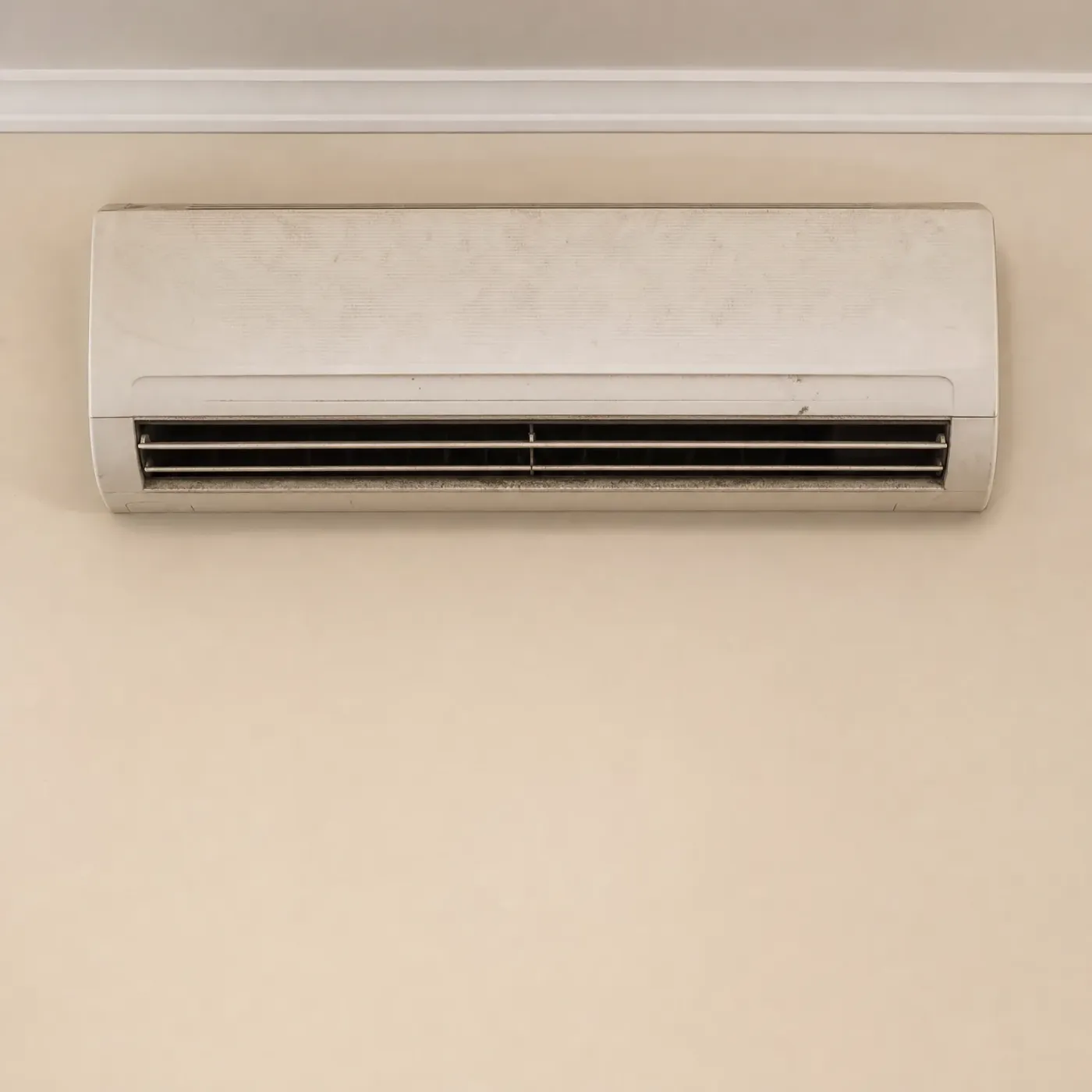

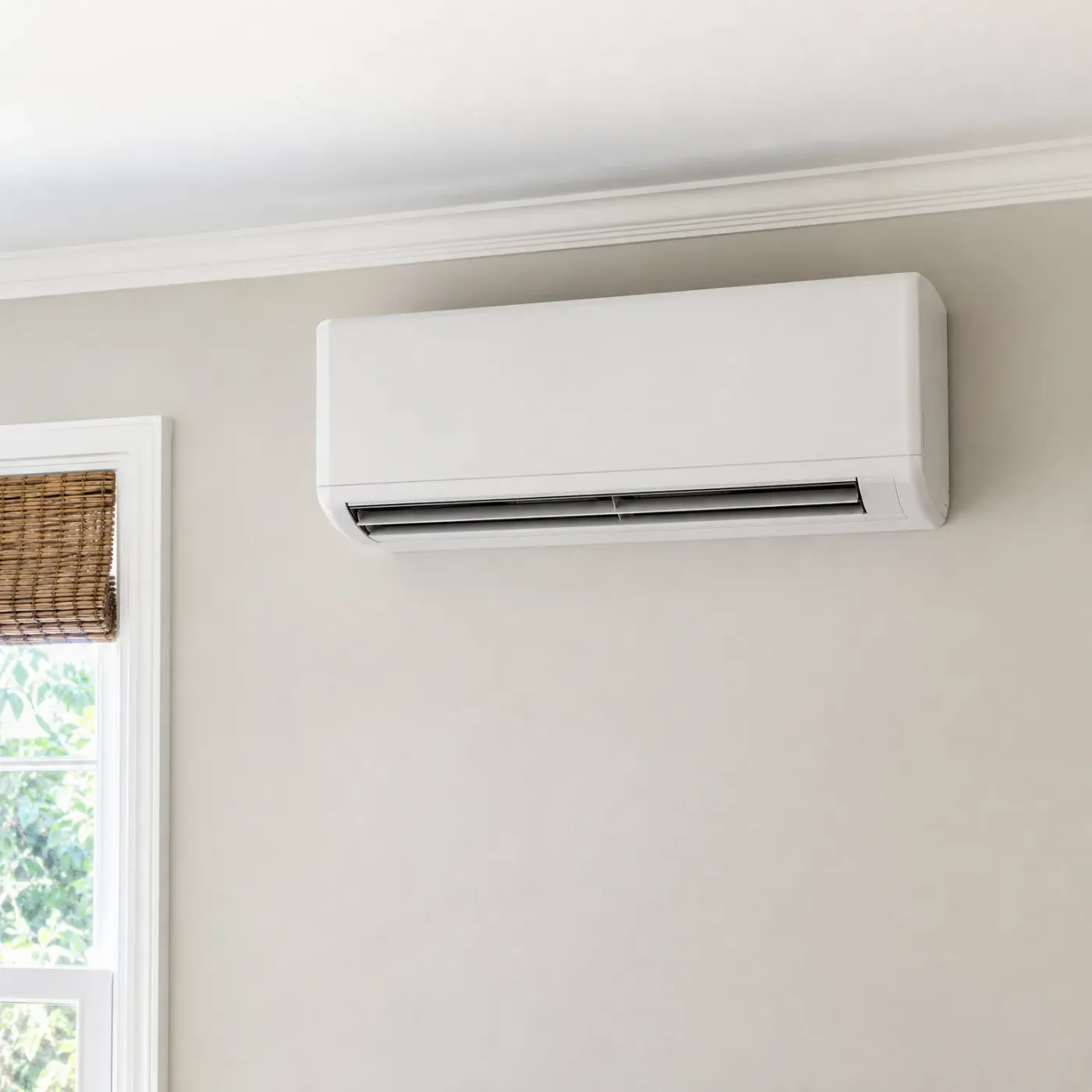
Air moves out steady and cold, and the unit cycles off once the room hits temperature instead of running straight through the afternoon. The case stays clean, no dust ring around the vents, no film on the wall below it.
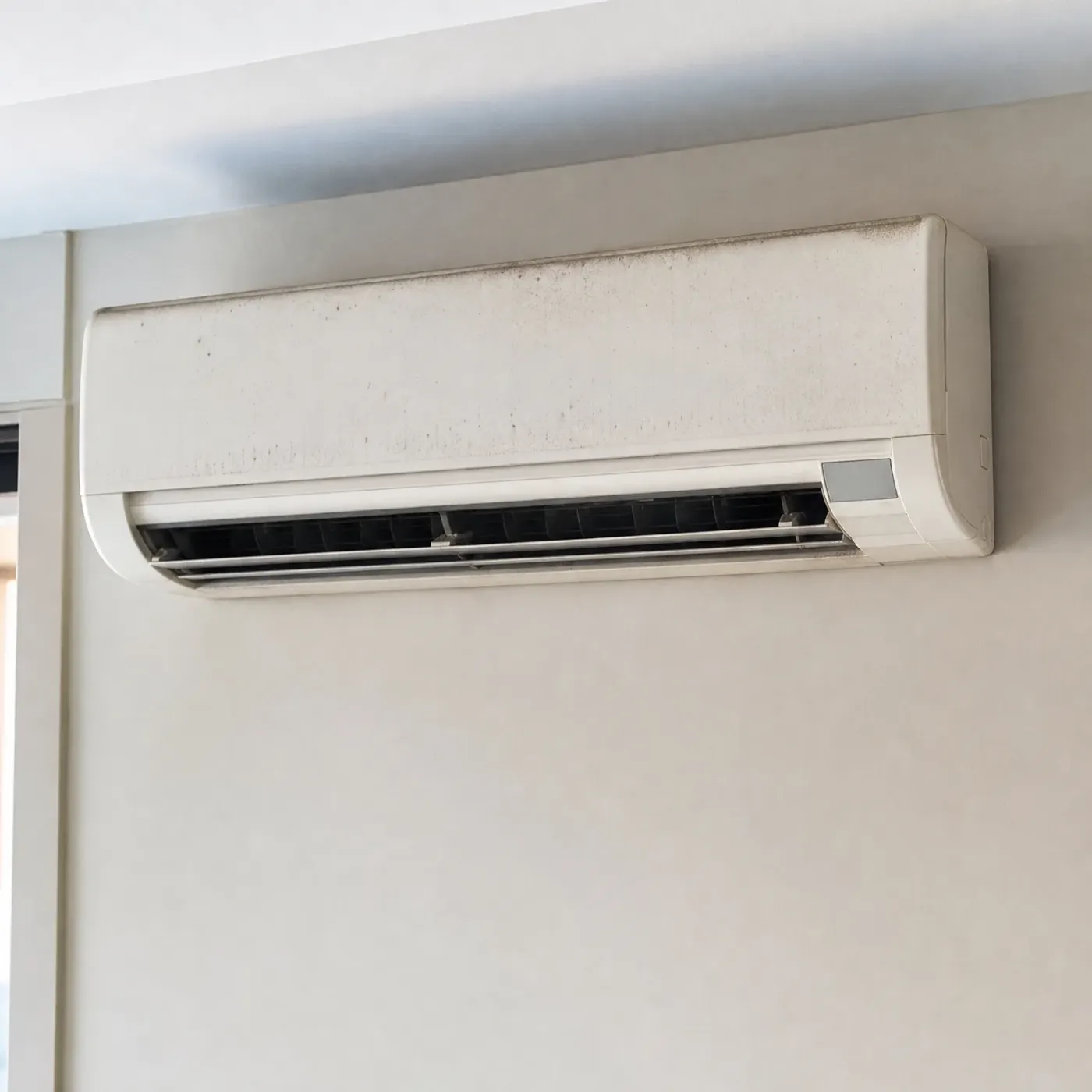
Dust has built up across the front of the unit and worked into the vents, a sign the filter behind it has been doing the same for a while. A mini split that looks like this is usually pulling less cold air than it used to, even running longer to get there.
At 15.21 cents a kilowatt-hour, a mini split that's lost its edge costs you more to run every month it goes untouched. A dirty coil or low charge makes the unit work longer to cool the same room, and that extra runtime shows up on the bill before it shows up as a breakdown.
EIA-861 2025 statewide residential average

A tune-up means the filters are clean, the coil is clean, the drain line is clear, and the refrigerant charge is where it should be. That's what lets the unit pull cold air into a room and shut off once it gets there, instead of running long and still falling short. Nothing about that changes because the unit is in Florida, but the long cooling season here means a neglected filter or a low charge gets found out faster than it would somewhere milder.
Getting this done means being matched with a contractor local to you who works on mini splits all year and has a good sense of what tends to fail on them and when. It's one contractor reaching out, not a handful competing for your call. You'll know who's coming and why, and the unit on your wall gets looked at by someone who's seen this model before, not a stranger learning it on your time.


The pro who reaches out is licensed in Florida.